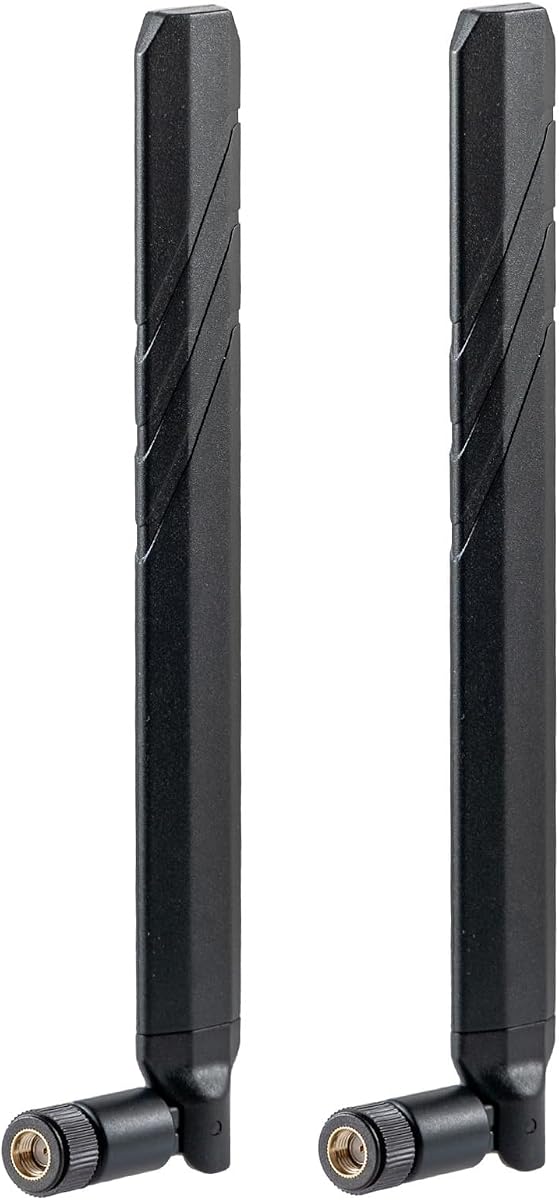
Cellular Trail Camera Replacement RP-SMA Antenna 2-Pack
4.7Editor score
600–6000 MHz frequency range
10 dBi claimed gain
RP-SMA male connector
Compare the best 4G antenna for trail cameras by connector, gain, compatibility, durability, and installation to improve remote cellular reception reliability.
A cellular trail camera antenna can make a meaningful difference when a hunting camera is mounted in a weak-signal area, inside a metal blind, or beneath dense tree cover. The right replacement combines a compatible connector, suitable gain, durable outdoor construction, and enough cable length to place the antenna where reception is stronger.
We compared all ten antennas using the specifications and compatibility information supplied for each product. The list evaluates connector type, supported frequency bands, claimed gain, radiation pattern, cable arrangement, mounting hardware, weather resistance, and compatibility with popular cellular trail camera brands.
Each review explains the strongest reasons to consider the antenna, along with its limitations and ideal installation. The top selections emphasize value, broad compatibility, and stronger gain, while prices and availability can change, so readers should confirm current details before ordering.
4.7Editor score

4.4Editor score
4.1Editor score
This side-by-side comparison highlights connector compatibility, operating range, claimed gain, and physical design, making it easier to select an antenna that fits both the trail camera and its installation environment.


The Bingfu SMA 4G LTE Antenna Replacement is a versatile external antenna with a 4.0 rating and a supplied SMA-to-RP-SMA setup. Its most appealing quality is practical compatibility: one package can serve numerous trail cameras, cellular routers, security cameras, hotspots, and other equipment that uses either connector type.
We may earn a commission when you buy through this link, at no additional cost to you.
The antenna operates across 698–960 MHz, 1710–2170 MHz, and 2300–2700 MHz, supporting major cellular networks including Verizon, AT&T, T-Mobile, and Sprint. Its stated 5 dBi gain is lower than the 9 or 10 dBi figures offered by several competitors, but the ten-foot cable allows the antenna to be positioned away from the camera enclosure for better real-world reception.
The package includes one antenna, an RP-SMA adapter, a wall bracket, and four self-tapping screws. Buyers must distinguish SMA from RP-SMA because the connectors have different center structures and are not automatically interchangeable. That small compatibility issue is the main reason this otherwise versatile antenna is not the most convenient choice for every camera.
This is a strong option for someone who needs an SMA antenna, an RP-SMA adapter, and a complete mounting kit in one package. It is particularly useful for owners of Moultrie Edge 3, Covert, Spartan GoLive M, Ghost GoCam, and cameras with standard SMA connections. Verify the connector before ordering, but for a flexible one-antenna solution, this model remains well matched to the task.
The included adapter broadens the antenna's usefulness beyond trail cameras. It can also serve compatible LTE routers, industrial gateways, mobile hotspots, outdoor security cameras, cellular home phones, repeaters, and CPE equipment.
The ten-foot lead is practical when the camera's built-in antenna is trapped near a metal surface or tree trunk. Mounting the external antenna vertically in a clearer location gives the radio a better chance of finding usable cellular coverage.
We may earn a commission when you buy through this link, at no additional cost to you.
The Cellular Trail Camera Replacement RP-SMA Antenna 2-Pack stands out with a 4.7 rating, the highest listed rating in this guide. It also claims 10 dBi gain across a wide 600–6000 MHz range, making it a compelling option for hunters seeking stronger reception without choosing the most expensive single-antenna design.
We may earn a commission when you buy through this link, at no additional cost to you.
Its broad compatibility list covers SPYPOINT Link Micro, LINK-EVO, LINK-S, Sola, LINK-DARK, and LINK-W cameras. It also supports TACTACAM Defend, Reveal X Gen 2.0 and 3.0, Reveal X PRO, Reveal PRO 3.0, Reveal XB, and Reveal SK models, plus compatible Stealth Cam trail cameras and other equipment using an RP-SMA connection.
The package includes two antennas, which is useful for controlling multiple cameras or keeping a spare on hand. It has an omnidirectional pattern, 50-ohm impedance, a stated VSWR below 1.8, and IP67 protection. Its main limitation is that mounting hardware is not identified in the supplied package information, and buyers must confirm the RP-SMA interface before purchase.
This is the best budget selection for users with compatible cellular cameras who value a two-pack and a high stated gain figure. It is also one of the most frequency-flexible options in the group. For buyers using standard SMA rather than RP-SMA, choose an SMA-specific alternative or confirm that an appropriate adapter is already available.
The stated 10 dBi gain makes this antenna attractive for remote locations where the camera's original antenna struggles. Actual improvement still depends on carrier coverage, terrain, obstruction, antenna placement, and the camera's radio behavior.
A two-pack can serve two camera locations, provide separate antennas for different orientations, or remain available as a replacement. It is especially practical for buyers who routinely monitor more than one property.
We may earn a commission when you buy through this link, at no additional cost to you.
The Bingfu RPSMA 4G LTE Antenna 2-Pack combines a 4.3 rating with a stated 9 dBi gain and support for widely used cellular trail camera families. It is a balanced middle ground between the lower-gain models and the highest-gain options in the roundup.
We may earn a commission when you buy through this link, at no additional cost to you.
Compatibility includes TACTACAM Reveal XB, Reveal SK, Reveal X Gen 2.0 and 3.0, several Reveal Pro and X variants, Reveal Ultra, and Defend models. The listed SPYPOINT support is narrower: Link S, Link S Dark, Link Micro, Link Micro S, and Link Micro Solar are included, but the manufacturer expressly excludes other SPYPOINT models.
The antenna operates from 698–960 MHz, 1710–2170 MHz, and 2300–2700 MHz. It is advertised for Verizon, AT&T, T-Mobile, Sprint, and other networks. Two RP-SMA antennas are included, but no adapter or mounting bracket appears in the stated package list.
This is a good selection for a buyer whose camera is specifically listed and who wants two units at a moderate gain. It is less suitable for SPYPOINT owners whose models fall outside the named range or for users who require SMA hardware. Checking the exact camera model and connector before ordering will prevent an avoidable mismatch.
The supported TACTACAM and Stealth Cam ranges make this a practical option for mixed camera collections. Its compatibility list is clearer than a generic cellular antenna because it names particular families and models.
The stated 9 dBi figure offers a meaningful balance for outdoor placements where the antenna can be mounted above the camera. It remains important to keep the unit vertical and avoid enclosing it in a metal housing.
We may earn a commission when you buy through this link, at no additional cost to you.
The Cellular Trail Camera Upgrade Replacement RP-SMA Antenna earns a 4.4 rating and offers the strongest balance of stated gain, weather resistance, and compatibility in this roundup. Its two-pack format also gives buyers more flexibility than a single-antenna package.
We may earn a commission when you buy through this link, at no additional cost to you.
The listed 9 dBi gain supports a connection-oriented design across 698–2700 MHz. An omnidirectional pattern, 50-ohm impedance, VSWR below 1.8, and IP67 rating suit permanent outdoor use. The product is intended to improve cellular reception and data transmission where a compatible trail camera experiences difficulty sending images.
Compatibility includes SPYPOINT Link Micro, LINK-EVO, LINK-S, Sola, LINK-DARK, and LINK-W. The list also covers TACTACAM Defend, Reveal X Gen 2.0 and 3.0, Reveal X PRO, Reveal PRO 3.0, Reveal XB, and Reveal SK. Compatible Stealth Cam models and other cellular cameras with an RP-SMA connector are also addressed.
This is the editor's choice because it does not require choosing between a high stated gain, outdoor protection, and a useful two-pack. The main caveat is connector type: the antenna has an RP-SMA male interface, so it will not directly fit a standard SMA port. Buyers should also confirm whether their preferred mounting method supplies separate brackets and fasteners.
The stated IP67 protection makes the antenna better suited to exposed installations than an unprotected indoor-style aerial. Mounting it above foliage and away from metal can help it perform more effectively in marginal coverage areas.
The antenna is expressly positioned as a signal-reception upgrade for cameras in remote locations. Its stated gain can help the camera establish and maintain cellular service, although carrier infrastructure remains a decisive limitation.
We may earn a commission when you buy through this link, at no additional cost to you.
The Bingfu 4G LTE Antenna 4-Pack is the most substantial multipack in the guide and carries a 4.4 rating. Its combination of four antennas, 8 dBi stated gain, and broad SMA compatibility makes it practical for a user managing several cellular cameras or cellular devices.
We may earn a commission when you buy through this link, at no additional cost to you.
The supported SPYPOINT models include Flex-S, Flex-S Dark, Flex-Plus, Flex-M, Flex Dual-Sim, Cell-Link, LM2, and Flex G-36. Other SMA-equipped cameras include Moultrie Edge 3, Covert Cellular, and Spartan GoLive M and Ghost GoCam. The stated exclusion for unlisted SPYPOINT models makes exact model verification essential.
Frequency coverage spans 698–960 MHz, 1710–2170 MHz, and 2300–2700 MHz, with Verizon, AT&T, T-Mobile, and Sprint identified as compatible networks. The antenna is omnidirectional with a standard SMA male connector. No bracket, screws, or adapter are listed, so those mounting accessories may need to be sourced separately.
This four-pack is best for SMA users who want to standardize antennas across several installations. It offers more units than any competing pack and enough stated gain to support remote cellular equipment. It is less convenient for RP-SMA cameras and for buyers expecting a complete mounting kit in the box.
Four matching antennas can be assigned to separate cameras, mounted at different heights, or held in reserve. That makes the pack attractive to users who manage multiple hunting properties or compare signal performance at several locations.
This model uses SMA, not RP-SMA. Checking the camera's antenna port before ordering is essential because a superficially similar connector may have a different center pin or socket configuration.
We may earn a commission when you buy through this link, at no additional cost to you.
The Eifagur 4G LTE Cellular Trail Camera Antenna offers a 4.1 rating and a notably complete installation package. Its ten-foot RG58 cable, wall bracket, screws, and RP-SMA-female-to-SMA-male adapter give buyers the parts needed to adapt and mount the antenna.
We may earn a commission when you buy through this link, at no additional cost to you.
Its stated 5 dBi gain is modest compared with the 9 and 10 dBi products in this guide. Nevertheless, the low-loss, thicker ten-foot cable is useful for moving the antenna away from the camera body, and the listed frequency range covers 698–960 MHz, 1710–2170 MHz, and 2300–2700 MHz.
Compatibility includes SPYPOINT Flex, Link Micro, LINK-EVO, LINK-S, Sola, LINK-DARK, and LINK-W models, plus TACTACAM Reveal X PRO, Gen 2.0, and Gen 3.0. The product description also identifies Moultrie Mobile Edge Pro, HCO Spartan HD GoCam, Covert Code Black and Blackhawk, Muddy wildlife cameras, and other cellular cameras.
This antenna is best for buyers who value a ready-to-install package and a long lead more than maximum stated gain. The included adapter broadens connector options, while IP67 protection supports outdoor use. It is a sensible practical choice when the main problem is antenna location and the included mounting hardware matters.
The wall bracket and four screws remove the need to search separately for basic mounting hardware. Combined with the adapter, this is one of the more self-contained packages in the roundup.
The ten-foot RG58 cable allows the antenna to be installed on a nearby tree, pole, wall, or other structure. Moving it beyond a metal cabinet and placing it vertically can be more valuable than adding gain without improving placement.
We may earn a commission when you buy through this link, at no additional cost to you.
The Bingfu RP-SMA 4G LTE Antenna 2-Pack has a 4.5 rating and provides a balanced level of stated gain. Its 6 dBi specification is lower than the 9 or 10 dBi choices, but it remains a versatile option for trail cameras and other RP-SMA cellular equipment.
We may earn a commission when you buy through this link, at no additional cost to you.
The frequency range includes 698–960 MHz, 1710–2170 MHz, and 2300–2700 MHz, while Verizon, AT&T, T-Mobile, and Sprint are identified as compatible networks. The omnidirectional design is intended to receive signals from multiple directions, which is useful when the camera position or nearby cellular tower can change.
Compatibility lists include TACTACAM Reveal XB, Reveal SK, Reveal X Gen 2.0 and 3.0, Reveal Pro and X variants, Reveal Ultra, Reveal X-Pro, and Defend. Supported SPYPOINT models are Link S, Link S Dark, Link Micro, Link Micro S, and Link Micro Solar; other SPYPOINT models are expressly not supported.
The two-pack is well suited to users who want one antenna per camera or a spare replacement. It can also work with cellular routers, security cameras, modems, hotspots, industrial gateways, and other RP-SMA devices. Its straightforward 6 dBi specification makes it a practical choice when moderate amplification and broad application are more important than maximum gain.
The same antenna can support compatible cellular routers, security cameras, industrial gateways, mobile hotspots, and surveillance equipment. That flexibility gives the two-pack value beyond a single hunting camera.
Because the antenna receives from all horizontal directions, it avoids the need to aim directly at a carrier tower. Vertical placement in a clear position remains important for effective results.
We may earn a commission when you buy through this link, at no additional cost to you.
The Bingfu Long Range Outdoor SMA Antenna has a 4.1 rating and emphasizes durable outdoor construction. Its fiberglass antenna cover is described as waterproof and intended for long-term use, making it a natural candidate for a permanent installation in exposed hunting environments.
We may earn a commission when you buy through this link, at no additional cost to you.
The antenna has a stated 6 dBi gain and covers the common cellular ranges from 698–960 MHz through 1710–2170 MHz and 2300–2700 MHz. Its omnidirectional pattern works with Verizon, AT&T, T-Mobile, Sprint, and other networks. The package includes one SMA antenna, an RP-SMA adapter, a wall bracket, and four self-tapping screws.
Compatibility is unusually broad for an SMA model. The listed cameras include several SPYPOINT Flex and Link families, numerous TACTACAM Reveal models, Stealth Cam Fusion, Deceptor, and Revolver families, Moultrie Edge 3 and Covert cameras, Spartan GoLive M and Ghost GoCam cameras, Cuddeback j series cameras, and Muddy Manifest cameras.
This antenna is best for a permanent installation where durability and a complete mounting package matter. It is not the strongest gain choice, and camera owners should verify whether they need SMA or RP-SMA. The included adapter makes the package versatile, but a compatible camera connector remains the essential starting point.
The fiberglass cover is designed for weather resistance and long-term outdoor deployment. That makes it suitable for cameras mounted on trees, posts, barns, and other structures where replacement access is limited.
The wall bracket, screws, and RP-SMA adapter are all included. Users can therefore choose between the native SMA connection and the adapter without sourcing those basic components separately.
We may earn a commission when you buy through this link, at no additional cost to you.
The Eifagur High Gain LTE Cellular Antenna delivers a stated 10 dBi, matching the highest gain figure among the single-antenna options in this guide. Its 4.1 rating and extensive compatibility list make it the premium choice for remote installations where stronger reception is the primary goal.
We may earn a commission when you buy through this link, at no additional cost to you.
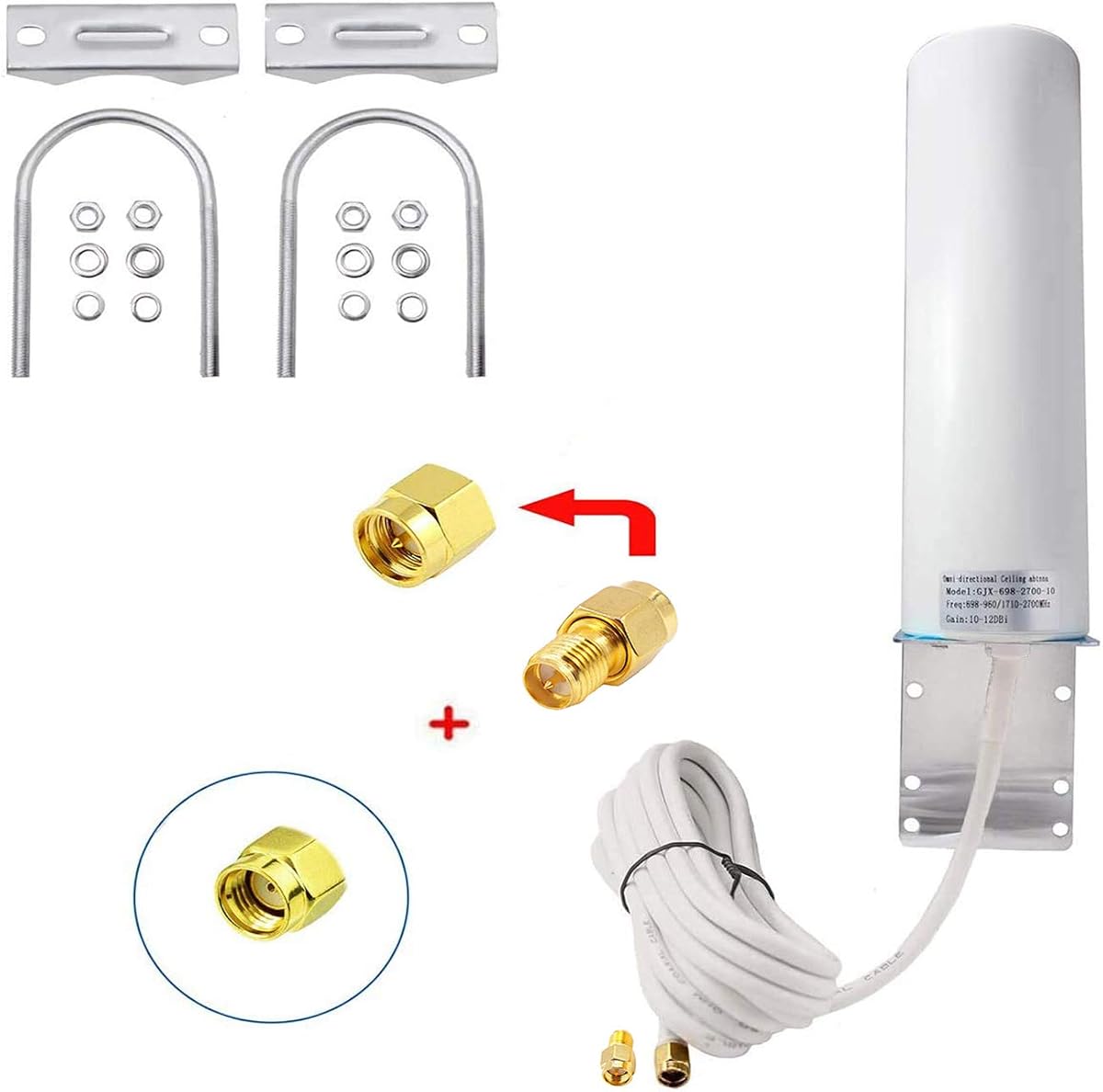
The antenna covers 698–960 MHz, 1710–2170 MHz, and 2300–2700 MHz with an omnidirectional pattern and 50-ohm impedance. A three-meter, ten-foot RG58 cable provides ample separation between the camera and antenna, while the included U-shaped bracket supports installation on a pole or pipe.
Supported equipment includes SPYPOINT FLEX-M, Flex G-36, Link Micro, Link Dark, Link S, LINK EVO, LINK-EVO-V, and Flex cellular cameras. TACTACAM Reveal X Gen 2.0 and 3.0, Reveal X PRO, Reveal PRO 3.0, Defend, and Reveal Ultra are also listed, along with Moultrie Edge, Moultrie Mobile Delta, Stealth Cam Fusion X, Revolver, Deceptor MAX, Muddy wireless cameras, Covert cameras, and Reolink Go PT Plus.
The installation guidance is important: mount the antenna vertically and as high as possible, using the U-shaped bracket on a roughly two-inch mast or pipe. This is best suited to buyers prepared to plan a careful external installation. It can also serve compatible non-camera devices, making the ten-foot lead useful for routers and security cameras.
At 10 dBi, this antenna offers the highest gain specification in the roundup. The advantage is most relevant in weak-signal locations where better received signal strength can improve connectivity and image transfer reliability.
The supplied installation note recommends keeping the antenna vertical and high, with the U-shaped bracket fitted to a suitable mast or pipe. Following that guidance can make a larger installation more effective than simply attaching the antenna directly beside the camera.
We may earn a commission when you buy through this link, at no additional cost to you.
The Eifagur 4G LTE Cellular Trail Camera Replacement Antenna combines a 4.6 rating with a balanced 7 dBi gain. That combination makes it an attractive all-around upgrade for compatible cameras, particularly when a buyer wants more than the lower-gain basic options without moving to the largest premium antenna.
We may earn a commission when you buy through this link, at no additional cost to you.
It covers 698–960 MHz, 1710–2170 MHz, and 2300–2700 MHz, with an omnidirectional pattern, 50-ohm impedance, VSWR below 1.8, and IP67 protection. The three-meter RG58 cable gives the installer enough distance to place the antenna outside a camera's immediate surroundings.
The listed camera coverage includes SPYPOINT LM2, Flex, Flex-S, Flex-M, Flex-Dark, Flex G-36, Link Micro, Link Dark, Link S, LINK EVO, and LINK-EVO-V. It also covers TACTACAM Reveal X Gen 2.0 and 3.0, Reveal X PRO, and Reveal PRO 3.0, along with HCO Spartan HD GoCam, Stealth Cam Fusion X, Stealth Cam Revolver, Moultrie Mobile Edge Delta, Muddy wireless cameras, Covert cameras, outdoor security cameras, and selected Reolink models.
The package contains one antenna, a wall mount bracket, four screws, and an RP-SMA-female-to-SMA-male adapter. This is a strong recommendation for a single-camera installation that values weather protection, a complete mounting kit, and a balanced gain specification. Verify the camera's exact model and connector before purchase.
The 7 dBi specification provides a middle ground for cellular cameras operating in partially obstructed locations. It may be especially suitable when the original antenna works intermittently but still struggles to maintain reliable uploads.
IP67 protection and the included wall bracket support a permanent external installation. The adapter broadens connector options, while the long RG58 lead allows the antenna to be moved away from the camera enclosure.
We may earn a commission when you buy through this link, at no additional cost to you.
The best trail camera antenna is defined less by a single headline specification than by a precise match among connector, frequency coverage, gain, placement, and camera compatibility. Use the following factors to narrow the field before making a final selection.
Look for the connector designation in the product listing and compatibility notes. Some packages include an adapter, while others provide only one connector type. If a replacement adapter is included, verify that it converts the correct side of the connection and that it can accommodate the camera's antenna cover or mounting point.
Avoid choosing solely by the highest frequency number. A wide bandwidth does not by itself guarantee better reception in every location. Confirm that the antenna is intended for 4G LTE cellular devices and that the camera model is included in the manufacturer's compatibility information.
For most installations, a moderate-gain antenna with a long lead and an unobstructed mounting position is more practical than a higher-gain unit placed directly against a tree or metal enclosure. Treat gain as one factor rather than a guarantee of faster uploads or stronger service in every location.
Also check whether the product supports cellular trail cameras generally or only cameras with a particular port. If the camera is not listed, contact the seller or manufacturer rather than assuming compatibility. Exact model verification protects against purchasing an antenna that cannot be connected.
Weather resistance does not make installation careless. Seal any connector interface according to the camera manufacturer's instructions, avoid pinching the cable, and inspect the antenna and mount during routine camera maintenance. Secure the lead so wind and animals cannot pull on the camera's antenna port.
Do not coil excess cable tightly beside the antenna or camera. Leave a gentle service loop, protect the cable from abrasion, and secure it to the tree or structure. If the antenna needs to travel much farther than the supplied lead, plan a compatible low-loss extension and verify connector compatibility before buying one.
For best results, keep an omnidirectional antenna vertical and place it as high as practical. Avoid placing it inside a metal enclosure, beneath dense brush, or directly behind the camera's own antenna. Good separation and a clear view of surrounding areas are often more valuable than a minor difference in gain.
For multiple installations, standardize on the same connector and mounting approach when practical. Keep spare antennas in protective storage, and document which camera uses each unit. If the cameras use different connectors, verify every model before purchasing a multipack.
Before installation, confirm the camera model, connector type, and any manufacturer restrictions on external antennas. Remove the existing antenna only when the camera is powered down, and follow the camera manual for connector removal, sealing, and reassembly. If the camera's internal antenna must remain connected, do not assume that an external unit can replace it; consult the camera manufacturer about supported antenna configurations.
Mount the replacement antenna vertically and as high as practical. Use the supplied bracket when appropriate, but ensure it is firmly attached to a tree, pole, wall, or other stable structure. Keep the antenna clear of metal surfaces, avoid surrounding foliage, and do not allow the cable to rub against bark or sharp edges. For an omnidirectional antenna, trying to point it toward a particular tower is unnecessary.
After mounting, power the camera and check its signal indicator and image-upload behavior from the associated app or service. Compare results with the original antenna when possible and adjust the external unit's position if connectivity remains inconsistent. During maintenance, inspect the connector, cable, bracket, and seals, remove accumulated debris, and check that neither branches nor wildlife have displaced the antenna.
Yes, an external antenna can improve reception when the camera's built-in antenna is obstructed or poorly positioned. It may receive a stronger available signal when installed vertically, higher, and away from metal or dense brush. It cannot create cellular coverage where the carrier network has no usable service, so terrain, tower distance, and network availability remain fundamental limits.
No. SMA and RP-SMA have different center-pin or center-socket arrangements, so an RP-SMA male antenna does not automatically fit an SMA port or the reverse. Check the existing antenna, the camera manual, and the seller's model list before ordering. Some products include an adapter, but the adapter must convert the correct connector configuration.
No. A higher gain specification can help when the available signal is weak, but placement, obstruction, cable loss, and the camera's radio design also influence performance. A 5 dBi antenna in a clear elevated position may outperform a higher-gain antenna mounted against a metal tree guard. Match the antenna to the installation rather than choosing only by gain.
Place it vertically, as high as practical, and away from metal objects, dense foliage, and direct ground contact. A tree, pole, wall, or camera blind can provide a stable mounting point. Secure the cable so it cannot swing, snag on branches, or pull against the camera connector, and leave enough clearance for wildlife and routine maintenance.
Not necessarily. The camera must use a supported connector, and its manufacturer may have restrictions on external antenna use, port placement, or sealing. Many antennas in this guide list compatible SPYPOINT, TACTACAM, Stealth Cam, Moultrie, Covert, Spartan, Muddy, and other models, but coverage is often model-specific. Verify the exact camera and consult its manual.
An omnidirectional antenna is usually easier for a trail camera because it can receive cellular signals from multiple directions without precise aiming. A directional antenna may be useful when the carrier tower is consistently in one direction, but it requires more careful alignment. All antennas in this roundup are described as omnidirectional, prioritizing installation convenience.
A longer lead can improve reception when it allows the antenna to move away from a metal enclosure, vegetation, or another obstruction. Longer runs may also introduce more cable loss, so the best length is the shortest one that provides useful separation. Secure the cable and avoid sharp bends or tight coiling.
A multipack can be convenient when every camera uses the same connector and antenna type. Two- and four-packs also provide spares and allow antennas to be positioned independently at different sites. If your cameras use different connectors, verify each model and choose a multipack only when one connector configuration fits them all.
The Cellular Trail Camera Replacement RP-SMA Antenna 2-Pack is the best budget choice because it combines a 4.7 rating, 10 dBi stated gain, a wide frequency range, and two antennas. The Cellular Trail Camera RP-SMA Booster 2-Pack is the editor's choice for its balanced 9 dBi gain, IP67 protection, and broad multi-brand camera coverage.
The Eifagur High Gain Antenna is the best premium option for buyers who want the highest stated gain and have a suitable outdoor mounting point. For every selection, connector compatibility should come first, followed by camera model support, adequate gain, and an installation position that keeps the antenna vertical and clear of obstructions.
Current prices, availability, and listing details can change, so review the current product page before purchasing. Confirm the exact camera model, connector, included hardware, and warranty information, and make sure the chosen antenna is permitted for use with that camera.