
Extra-Small Wireless Earbuds Z1
3.8Editor score
Helmet-friendly flush profile
Lightweight semi-in-ear design
Natural ambient awareness
IPX5 sweat resistance
Discover the best low profile earbuds for helmets, with detailed comparisons of fit, battery life, sound, connectivity, comfort, and helmet compatibility.
Low profile earbuds for helmets must fit neatly inside the ear without creating pressure against helmet liner or ear padding. The right pair also needs dependable Bluetooth, useful battery life, and a secure fit that survives donning a helmet, riding vibration, and changing outdoor conditions.
This guide compares ten compact and helmet-oriented earbuds using the information supplied for each model. We examine physical size, weight, fit, battery performance, wireless functions, call features, environmental resistance, and practical advantages or compromises for motorcycle riders, cyclists, and other helmet wearers.
The reviews reveal three especially relevant options: a helmet-focused model with a silicone in-ear design, a feature-rich mini pair with multipoint connectivity, and an ultra-small cycling-oriented set. Ratings, availability, and prices can change, so confirm the latest listing details before making a purchase.
3.8Editor score

5.0Editor score

2.7Editor score
The comparison below places all ten products side by side, highlighting the features most relevant to helmet wearers: profile, fit, battery life, wireless capabilities, and outdoor or athletic suitability.



The Artevive Motorcycle Earbuds are one of only two products in this list described explicitly for motorcycle riders and helmet use. With a supplied rating of 2.7, however, this is not the strongest choice based on customer feedback alone. Its important advantage is the specifically engineered low-profile silicone shell, which is intended to sit fully inside the ear rather than project into the helmet liner.
We may earn a commission when you buy through this link, at no additional cost to you.
The design directly addresses a common issue with conventional earbuds: a protruding housing or stem can be pressed against helmet padding when the outer shell closes. Artevive says its flexible silicone design adapts to the ear, and the supplied information notes that two ear-tip sizes are included. That arrangement is intended to preserve stability while putting the helmet on and taking it off, as well as during the movement and vibration associated with riding.
For audio, the earbuds connect directly to a phone over Bluetooth without requiring an app or cable. Music, podcasts, and GPS audio are the intended uses, while the case provides up to two or three additional full charges and the earbuds themselves offer up to six hours of playback. The major limitation is equally clear: there is no microphone or rider-to-rider communication function, so this is a personal entertainment and navigation product rather than a complete motorcycle communications system.
This is a compelling choice for a solo rider who prioritizes a nearly invisible profile and accepts that the product is designed primarily for music and navigation. Its low rating warrants caution, so buyers should examine recent customer feedback and consider whether a helmet Bluetooth headset with communication would better serve their needs. For riders who prioritize helmet-specific fit over communication features, it remains one of the most purpose-focused options here.
The fully in-ear silicone approach minimizes the chance that a stem or bulky driver housing will collide with padded helmet liners. It is particularly relevant for full-face helmets, where available space around the ear is limited.
Music and GPS are straightforward to access after pairing with a phone, but the absence of a microphone means this product does not support intercom conversations with other riders.
We may earn a commission when you buy through this link, at no additional cost to you.
The Artevives Bluetooth Moto Earbuds stand out as the strongest all-around option for a rider who wants a small, helmet-compatible pair for music and navigation. The supplied rating is 5.0, the highest among all ten products, and the description directly addresses the pressure, fit, and battery issues that can undermine ordinary earbuds beneath a helmet.
We may earn a commission when you buy through this link, at no additional cost to you.
Its ultra-slim silicone body is designed to sit flush inside the ear with no pressure against helmet padding. The flexible shell is intended to adapt to the wearer's ear and remain locked in place, while two tip sizes offer a degree of fit adjustment. Because the product is made for solo motorcycle riders, it keeps the feature set focused: connect to a phone, stream music or podcasts, and hear turn-by-turn GPS instructions without installing an app.
Battery performance is more than adequate for many rides. The earbuds provide up to six hours of playback per charge, and the compact charging case supplies two or three additional full recharges. That gives solo riders more flexibility than a pair that can only handle one short journey. The straightforward pairing process also reduces setup friction, which is useful when the goal is to begin a ride quickly rather than navigate a complicated control system.
The meaningful compromise is that there is no microphone or intercom capability. It is therefore not appropriate for riders who expect group communication, and sound adjustment appears limited to what the earbuds provide by default. Even so, the combination of a 5.0 rating, purpose-led helmet design, discreet profile, and multi-charge battery makes this the most balanced recommendation in the guide.
A flush silicone profile is more likely to avoid the uncomfortable pressure created when a traditional earbud housing is trapped against a helmet liner. The included tip sizes further improve the chance of a stable and comfortable seal.
Direct phone pairing keeps setup straightforward for music, podcasts, and navigation. Riders who need communication with a group should treat this as an entertainment headset rather than an intercom solution.
We may earn a commission when you buy through this link, at no additional cost to you.
The Invisible Mini Earbuds SK19 are designed around a very small, unobtrusive housing that weighs only 0.1 ounce. That makes them a credible option for a helmet wearer who dislikes the bulk of stem-style earbuds, although the listing is aimed more broadly at work, sleep, and everyday listening than at motorcycle riders. Their supplied rating of 3.9 reflects a generally positive but not category-leading response.
We may earn a commission when you buy through this link, at no additional cost to you.
Bluetooth 5.3 supports stable wireless connectivity, while physical noise reduction and acoustic noise cancellation are used to improve microphone performance during calls. Audio is positioned as immersive stereo sound, with the product particularly suited to music and podcasts. The extremely light semi-discreet body may also be easier to wear for long periods, including while resting on one's side.
The earbuds deliver up to four hours of listening per charge, and the case contributes another 20 hours for a stated total of 24 hours. The case itself can be recharged in about an hour. Pairing is managed by removing the earbuds from the case, waiting for the alternating red and blue indicator lights, and selecting SK19 in the phone's Bluetooth settings.
Helmet compatibility is plausible because of the tiny profile, but it should not be treated as assured: no helmet-specific stability claim or water-resistance rating is supplied. Those who ride in wet weather or experience heavy vibration may prefer a more explicitly sport-oriented model. This pair is best for someone who values minimal size, strong everyday functions, and a lower-profile alternative to bulky earbuds.
The 0.1-ounce housing leaves very little material between the ear and helmet padding. That helps with clearance, although riders should still check how their individual helmet liner surrounds the ears.
Bluetooth 5.3, a four-hour earbud charge, and a case that adds up to 20 hours make the pair convenient beyond a single ride. Noise-focused microphones add value for calls in ordinary everyday environments.
We may earn a commission when you buy through this link, at no additional cost to you.
The Small Mini Invisible Earbuds SK18 use a compact 0.1-ounce format to minimize bulk beneath a helmet and remain nearly invisible during normal wear. They are not marketed specifically for riders, but the size and lack of a prominent stem make them relevant to anyone prioritizing a low-profile fit. Their supplied rating is 4.0, placing them slightly above the SK19 in customer feedback.
We may earn a commission when you buy through this link, at no additional cost to you.
The earbuds use Bluetooth 5.3 and include physical noise reduction plus acoustic noise cancellation for clearer microphone performance. Their supplied description also highlights a natural, immersive stereo presentation. While the product is primarily a compact music and podcast option, call handling and broad compatibility add value to riders who may connect their helmet earbuds to different phones, tablets, or computers.
Battery life consists of approximately four hours per earbud charge and another 20 hours supplied by the case. Pairing is especially simple: remove both earbuds from the case, turn on Bluetooth, and select SK18. The product is compatible with smartphones, tablets, laptops, smartwatches, iOS, Android, and Windows-based Bluetooth devices.
The main reservation is that helmet suitability depends entirely on fit and personal comfort rather than a specialized design. There is no stated water-resistance rating, and the supplied information does not describe retention under strong vibration. For cyclists, commuters, or riders in mild conditions who want a compact pair and easy device switching, it is a reasonable choice; more aggressive outdoor users should examine the Z1 or other sports-focused alternatives.
The small body and stem-free appearance reduce the chance of an earbud being pushed uncomfortably against a helmet liner. Its simple device selection process also reduces setup time.
Compatibility with major Bluetooth-enabled platforms makes the earbuds practical for riders who alternate between a phone for navigation and a computer for calls or entertainment.
We may earn a commission when you buy through this link, at no additional cost to you.
The JLab JBuds Mini Tones are among the smallest and most feature-complete products in the comparison, weighing 3.3 grams per earbud. Their supplied rating of 4.2 is solid, and while they are not described as motorcycle earbuds, their compact scale and IP55 sweat and dust resistance make them plausible for cycling and other helmet-based activities.
We may earn a commission when you buy through this link, at no additional cost to you.
The major functional advantage is Bluetooth multipoint, which allows a connection to two devices at the same time. A rider can listen to navigation from a phone and switch to a laptop-based podcast or call without manually pairing again each time. Compatibility extends across macOS, iOS, Android, and PC. There is no included 3.5 mm jack, so the product is entirely wireless.
Sound features are unusually well documented for such a compact model. Four onboard presets include JLab Signature, Balanced, Bass Boost, and Custom, while Be Aware Audio lets outside sound enter without removing the earbuds. The JLab app provides additional EQ adjustment, touch-control remapping, a hearing-volume limiter, and firmware updates. These capabilities are useful for tuning the balance between music and awareness.
Battery life is listed at five and a half hours per earbud, with the case bringing the total to 20 hours. That is better than the four-hour figures associated with several ultra-small alternatives. The tradeoff is that advanced setup and control depend on the app, and helmet fit is not a stated priority. JLab is a strong all-around choice for a tech-oriented rider who values multipoint, app controls, and outdoor durability.
Maintaining connections to two devices is useful for riders who want navigation on one platform and entertainment or calls on another. The automatic switch reduces the need to re-pair manually.
EQ presets and Be Aware Audio let the user decide how much music should dominate outside sound. Customization requires the JLab app, so those controls are less immediate than physical buttons.
We may earn a commission when you buy through this link, at no additional cost to you.
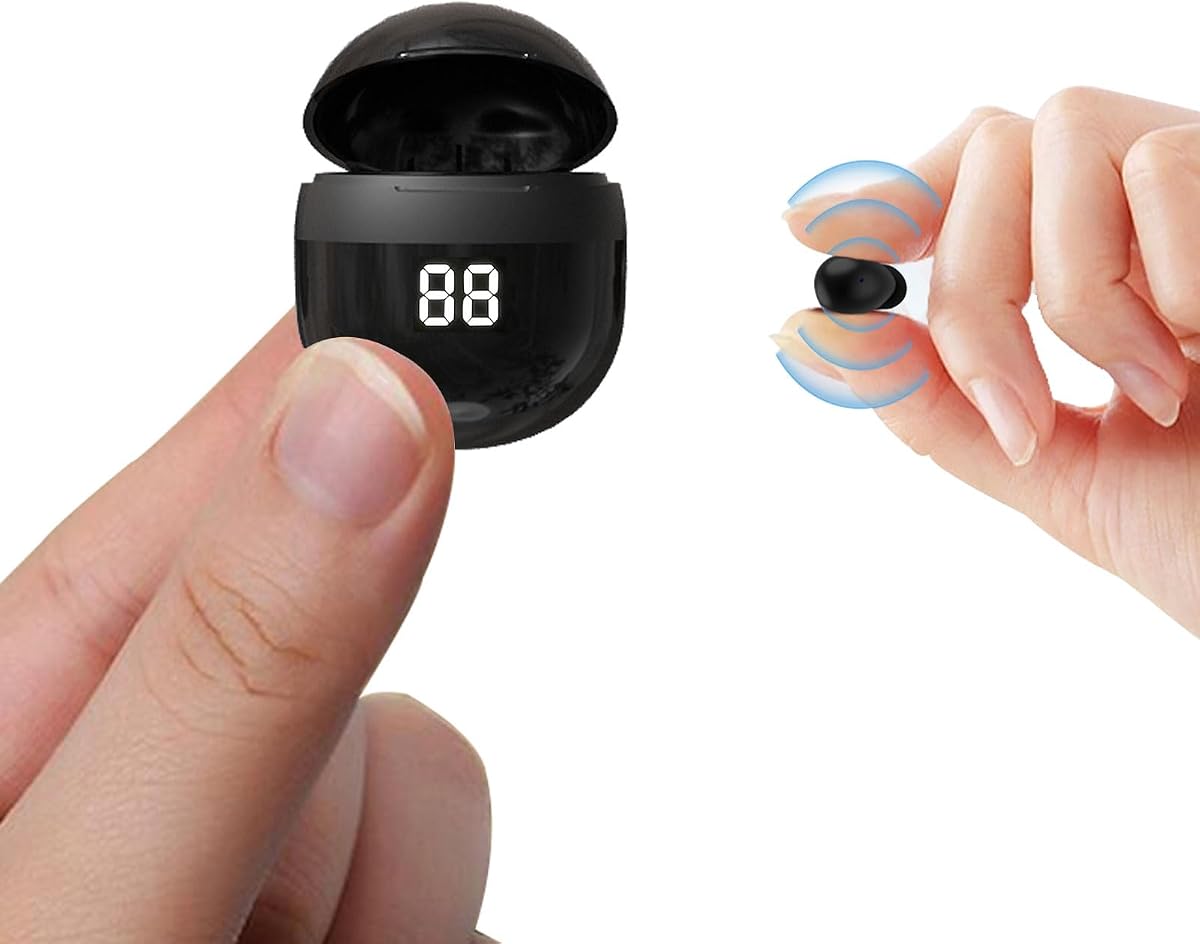
The Extra-Small Wireless Earbuds Z1 are one of the few models in this roundup explicitly marketed for bicycle and sports helmets. At 2.3 grams per earbud, they use an ultra-thin, stemless semi-in-ear design that sits shallowly in the ear. Their supplied rating of 3.8 is moderate, but the product's stated use case and physical design make them one of the most directly relevant alternatives for helmet wearers.
We may earn a commission when you buy through this link, at no additional cost to you.
The helmet-focused rationale is straightforward. A flush body is less likely to poke into padding, while the semi-in-ear shape rests gently rather than being deeply inserted. That same shallow fit allows some ambient sound through, which can help a cyclist or rider remain aware of traffic and surroundings. The product description specifically links this feature to safer commutes, workouts, and phone conversations.
Sound is presented as natural and balanced, emphasizing clear vocals and detailed mids rather than exaggerated bass. Each earbud includes a microphone for calls, while touch controls on both sides manage music and calls. IPX5 sweat resistance is another meaningful advantage for active use, offering protection during workouts and light rain without implying complete waterproofing.
The main drawback is that the supplied information does not provide concrete earbud or case battery figures. That makes it difficult to compare endurance directly with models offering precise four-, six-, or twenty-hour claims. Still, for anyone whose first priority is helmet clearance, an ultra-light form, and environmental awareness, the Z1 is a focused and practical selection.
The low-profile stemless body is explicitly intended to avoid poking into a sports or bicycle helmet. Its shallow insertion also reduces the sensation of having an object deeply seated in the ear.
The semi-open approach lets some outside sound reach the wearer. That is useful for environmental awareness, although it may also allow more road or wind noise into the listening experience.
We may earn a commission when you buy through this link, at no additional cost to you.
The Wireless Bluetooth Headset Two-Pair Set offers a different proposition from the single-pair competitors: it includes both ultra-slim sleep earbuds and short-handle sports earphones. That makes it easy to assign one pair to helmet riding and the other to sleeping or everyday use. With a supplied rating of 4.1, it is also one of the better-rated models in the comparison.
We may earn a commission when you buy through this link, at no additional cost to you.
Bluetooth 5.4 is used for faster, more stable connections, and the microphones combine physical and acoustic noise reduction for clearer calls. The short-handle sports design may be less inconspicuous than a completely stemless model, but it should still fit inside many helmets if the housing is sufficiently shallow. The sleep pair offers a more compact alternative for riders with very limited liner clearance.
Battery endurance is one of the main attractions. Each set can provide four to six hours of listening, the two earphone pairs can be used in rotation, and the case is said to bring total endurance as high as 36 hours. That arrangement is particularly helpful for riders who do not want to interrupt a trip because one pair needs charging.
Touch controls are managed by a T08 chip, which the manufacturer says improves touch accuracy and reduces false touches and delayed responses. The absence of a stated water-resistance rating limits confidence in heavy rain, and the dual-format package may be unnecessary for someone who only wants one helmet pair. Even so, it offers useful flexibility at a time when one pair could fail or need recharging.
Two pairs can be rotated during a long journey, while the 36-hour combined endurance figure reduces the likelihood of being stranded without music or navigation audio.
The ultra-slim sleep pair minimizes bulk, while the short-handle sports pair offers a more conventional grip and control layout. Riders can choose whichever shape fits their helmet liner best.
We may earn a commission when you buy through this link, at no additional cost to you.
The Mini Earbuds for Work and Sleep prioritize a compact, ergonomic design that may sit comfortably inside a helmet liner. Each earbud weighs just 0.1 ounce, and the product description explicitly recommends checking the size-dimension image for fit. Their supplied rating is 4.2, giving them a solid customer-feedback score despite not being marketed primarily for riding.
We may earn a commission when you buy through this link, at no additional cost to you.
The low-profile shape is intended to reduce pressure, particularly when lying on one's side, but it also has clear value beneath protective headgear. Bluetooth 5.3 and physical noise isolation support stable connectivity and clearer calls. There is no helmet-specific retention claim, so the fit is best judged in relation to the wearer's ear shape and the interior padding of the chosen helmet.
The battery specification is easy to understand: up to four hours from the earbuds and an additional 20 hours from the compact charging case, for a stated total of 24 hours. A reset process is also documented. Placing both earbuds in the case, closing the lid for five seconds, and removing them again is said to solve many pairing issues or cases where only one earbud works.
For a rider seeking a small everyday pair, this model offers transparent specifications and a practical troubleshooting method. Its lack of an IP rating and explicit helmet language means it is better suited to fair-weather commuting and general low-profile use. It is a sensible backup or secondary pair, while the Artevive and Z1 options are more purpose-built for the helmet category.
The lightweight body and low-profile shape reduce both visual bulk and the chance of pressure against padding. Checking the supplied dimensions before purchase can prevent an uncomfortable mismatch.
The case extends the four-hour earbud runtime by up to 20 hours and doubles as a reset dock. The documented five-second reset process is helpful for resolving common connection failures.
We may earn a commission when you buy through this link, at no additional cost to you.
The Invisible Small Mini Sleep Earbuds are among the smallest products reviewed, weighing only 0.08 ounce per earbud and occupying roughly the visual footprint of a peanut. Their supplied rating of 4.1 indicates generally favorable feedback. Although the product is promoted for office use, listening at work, and sleep, its extreme discretion can also benefit riders who dislike visible earbuds inside a helmet.
We may earn a commission when you buy through this link, at no additional cost to you.
Bluetooth 5.3 and true wireless technology are presented as providing a stable signal with low latency. That makes the earbuds suitable for phone-based navigation and music. A distinctive tumbler-shaped charging case can stand upright and display the remaining charge through LEDs, helping users avoid discovering an empty case only after putting a helmet on.
The earbuds last up to four hours per charge, and the case adds up to 20 hours. A full earbud recharge takes about one hour. Touch controls provide play and pause, volume changes, call handling, caller announcements, muting, and Siri voice-assistant access when paired with a compatible phone.
As with other ultra-small sleep-oriented models, there is no stated IP rating or dedicated helmet fit. The lack of a protruding stem is beneficial for clearance, but retention during vigorous riding cannot be assumed from general sleep specifications. This pair is best for discreet everyday listening and helmet riders who prioritize a nearly invisible profile over weatherproofing or specialized controls.
The peanut-sized housing creates very little visual bulk beneath or around a helmet. That discretion comes with the added benefit of minimal weight during extended wear.
The upright case and LED power display make charge status easier to check before a ride. Combined with the case's additional 20 hours, this reduces dependence on finding an outlet during travel.
We may earn a commission when you buy through this link, at no additional cost to you.
The Invisible Mini Wireless Bluetooth Earbuds offer a compact, nearly invisible in-ear design with an IPX5 water-resistance rating. Their supplied rating of 4.2 is among the stronger customer-feedback results in the guide. While the earbuds are marketed primarily for work, study, and sleep, the water protection and very small body make them relevant for helmets in changing weather.
We may earn a commission when you buy through this link, at no additional cost to you.
The smooth ergonomic shape uses soft material and does not project outward, reducing both visual bulk and pressure during extended use. Multiple ear-tip sizes are included to help create a stable, snug fit across different ear shapes. This is particularly useful for helmet riders because a poor seal can affect both retention and the amount of bass perceived in the audio.
A high-performance driver is used for clear treble and balanced bass, while fast automatic pairing and low-latency Bluetooth support are intended to make phone-based navigation and media convenient. The earbuds work with Bluetooth-enabled smartphones, tablets, and laptops. An unusual but useful detail is the language-setting procedure, which allows the device voice prompt to be changed through a button sequence.
The product description does not provide exact playback or case-battery figures, making it less straightforward to compare with the other models. It also lacks any rider-specific features such as navigation prompts, helmet-specific retention language, or communications. Its strongest argument is the combination of tiny dimensions, multiple tips, and IPX5 protection for riders who want a low-profile pair with better wet-weather tolerance.
The IPX5 rating supports use around sweat and light rain. It is not a claim of complete waterproofing, so the earbuds should still be protected from prolonged direct water exposure.
Several soft tip sizes allow the user to find a more secure fit for the ear. A better seal can improve retention and bass response while reducing movement under a helmet.
We may earn a commission when you buy through this link, at no additional cost to you.
The most important helmet-earbud decision is not merely whether a product is called mini. Fit, physical clearance, retention, wireless behavior, battery life, and environmental protection should all be considered against the way you ride and the type of helmet you use.
A helmet creates a fixed environment around each ear, so even a slightly protruding earbud can become uncomfortable when the cheek pad presses inward. Look for a stemless housing, an entirely in-ear silicone shell, or explicit references to sitting flush beneath a helmet. The Artevive models and Z1 are strongest in this category because their descriptions directly address helmet padding and liner clearance.
Prioritize dimensions and shape over the word mini. A product that appears small in a photograph may still sit too high in the ear. Check the maker's fit photographs and consider the thickness of your helmet's ear pocket.
Helmet liners, vibration, wind, and movement can dislodge earbuds that were stable during a desk test. A secure fit may come from a flexible silicone shell, multiple ear-tip sizes, or a shallow semi-in-ear geometry. The Artevive pair is designed to remain locked in place during helmet use, while the Z1's stemless construction and the final product's multiple tips offer alternative ways to improve retention.
Choose a model with at least some fit guidance and avoid assuming that every ear will accept the same housing. If you can try the product, wear it with your actual helmet for several minutes and move your jaw and head while checking whether the fit changes.
Battery estimates should be compared on two levels: earbud runtime and total time with the charging case. A six-hour earbud charge may cover a long solo ride, while a four-hour figure is better suited to shorter journeys unless the case can be recharged between rides. Products such as the two-pair headset can also be rotated when one set needs power.
Pay attention to the case as well as the earbuds. A case that adds 20 hours provides much more flexibility than one with an unspecified reserve. Be cautious with models that lack exact battery figures, because broad claims do not permit a meaningful side-by-side comparison.
Bluetooth 5.3 and 5.4 appear throughout this list and generally support stable connections with modern phones. More important for some riders is multipoint, which lets one pair remain connected to a phone and computer. JLab's model offers this feature and is useful for riders who alternate between navigation and computer-based audio.
If you only use one device, conventional Bluetooth 5.3 may be sufficient. Check the pairing instructions because some models use a specific device name such as SK18 or SK19, while others connect directly through standard phone settings.
Call quality and motorcycle communications are separate considerations. Several products include microphones with physical or acoustic noise reduction, but neither Artevive model includes a microphone. The Artevives explicitly states that there is no rider-to-rider talk function, so buyers needing group communication should look for a dedicated motorcycle intercom or helmet communication system.
Do not assume an ordinary phone microphone is suitable for communication at speed. If clear calls matter, check the product's supported call features and consider a separate helmet microphone or communications unit designed for riding conditions.
Helmet wind and road noise can make bass-heavy earbuds less effective or physically uncomfortable. The Z1 emphasizes a natural, balanced soundstage and a semi-open design that allows some outside sound through. JLab adds four EQ presets, Be Aware Audio, and app-based customization, offering the most flexible tuning in this list.
Decide whether ambient awareness is a benefit or a distraction. More sound leakage can improve environmental awareness but may reduce music clarity, while a sealed in-ear design can improve bass at the cost of blocking more outside noise.
Outdoor earbuds encounter sweat, rain, dust, and helmet liner moisture. IPX5, found on the Z1 and the final Invisible Mini pair, is relevant for active use and light rain. IP55 on the JLab JBuds Mini Tones covers both sweat and dust resistance. Products without an IP rating should be handled more carefully outdoors.
An IP rating does not necessarily mean the earbuds can be submerged or washed under running water. Follow the maker's care instructions, and avoid charging a wet pair even if its general construction appears durable.
Physical touch controls can make basic actions accessible without a phone, but the range of commands differs between models. The two-pair headset emphasizes improved touch accuracy, while the Invisible Small Mini set includes volume, call, mute, playback, and voice-assistant commands. JLab's app unlocks deeper EQ and control changes but adds software dependence.
Consider how often you will ride and whether you want to operate the earbuds with gloves. Simpler physical controls can be easier to manage, while app-based features may be worthwhile if sound customization is a major priority.
Begin by fully charging both the earbuds and their case, then test the fit without a helmet. Select the most suitable ear tips, place each earbud gently in the ear, and move your jaw and head to identify any pressure or looseness. Put on the helmet in the same way you normally would, then check whether the earbud body, controls, or tips contact the liner.
Pair the earbuds before riding and connect the phone or other source according to the product's instructions. For the SK19, look for the SK19 device name after the indicator lights alternate; the SK18 uses a similar selection process. For navigation, start the route before moving, set a safe volume, and confirm that prompts are audible without blocking essential traffic sounds. Avoid handling the earbuds while riding.
After a ride, remove the earbuds carefully rather than pulling on a cable or tip. Wipe the housings and tips with a dry or lightly damp soft cloth, remove debris from the charging contacts, and return the earbuds to the case. Keep the charging ports dry, do not charge wet earbuds, and store the pair away from extreme heat and direct sunlight. Follow the manufacturer's instructions for any model with an IP rating.
Many compact earbuds can physically fit under a helmet, but fit alone does not determine whether they are suitable for riding. Helmet liners can press against bulky housings or stems, while wind, vibration, and sweat can affect comfort and stability. Models with an explicitly low-profile or helmet-focused design provide a clearer starting point for fit and clearance.
Comfort depends on the shape, weight, and seal of the earbuds as well as the interior design of the helmet. The Artevive models use low-profile silicone designs, while the Z1 uses a light, semi-in-ear form. Riders should test the earbuds with their own helmet and jaw movement because an ear that feels fine without headgear may still create pressure once the liner closes around it.
Neither of the Artevive helmet-focused models includes a microphone or rider-to-rider communication function, despite the first product's title using the word headset. The remaining products include microphones for calls but are not documented as motorcycle intercoms. Riders who need group communication should choose a dedicated helmet communication system rather than assume these earbuds can handle that task.
Earbud runtime determines how long one charge lasts, while case runtime determines how much total listening is available between opportunities to recharge. Six hours of earbud playback may suit a longer ride, and a case adding 20 hours provides useful backup. Exact figures are preferable because some products in this list do not provide enough battery detail for a direct comparison.
It is particularly useful for motorcycle riding, cycling, workouts, and travel where sweat or rain may reach the earbuds. The Z1 and the final Invisible Mini model carry IPX5 ratings, while the JLab JBuds Mini Tones carry IP55. These ratings support suitable active and light-wet-weather use but should not be interpreted as permission to submerge or wash the earbuds.
Sealed in-ear models can provide stronger bass and a more stable listening experience, but they may block more outside sound. Semi-in-ear models, such as the Z1, rest more shallowly and allow ambient awareness. Riders should consider whether their priority is immersive audio, reduced pressure, or hearing more of the surrounding environment.
Retention depends on the shell, tip size, ear shape, helmet fit, and movement level. Flexible silicone designs, stable tips, and helmet-specific construction improve the odds, but no compact earbud can guarantee security for every rider. A proper fit test, correct tip selection, and securing the helmet liner consistently are the best precautions.
Yes, when the earbuds connect to a phone through Bluetooth and the phone is running the desired audio or navigation application. The Artevive products explicitly target solo riders seeking music and GPS audio, while the other models also support standard phone-based calls, music, and podcasts. Volume should be set conservatively so navigation prompts remain clear without masking important outside sounds.
The Artevives Bluetooth Moto Earbuds are the strongest overall choice because they combine a 5.0 supplied rating with a helmet-specific silicone design, a six-hour earbud battery, and a case that adds several recharges. The Artevive Motorcycle Earbuds offer a similarly purposeful helmet fit and are the premium-oriented choice, while the Z1 stands out for cyclists and riders who want an ultra-light stemless form with IPX5 protection.
Above all, prioritize clearance and fit before any secondary feature. A miniature earbud that crowds the helmet liner will undermine the benefits of good sound, battery life, or wireless convenience. Confirm the dimensions, ear-tip options, retention design, and water-resistance rating, then test the chosen pair with the exact helmet and riding style you expect to use.
Ratings and product availability can change, and prices should be checked at the time of purchase because current offers may differ. Comparing the latest listing, recent customer feedback, warranty information, and product dimensions can provide a more accurate final decision than relying on this guide alone.